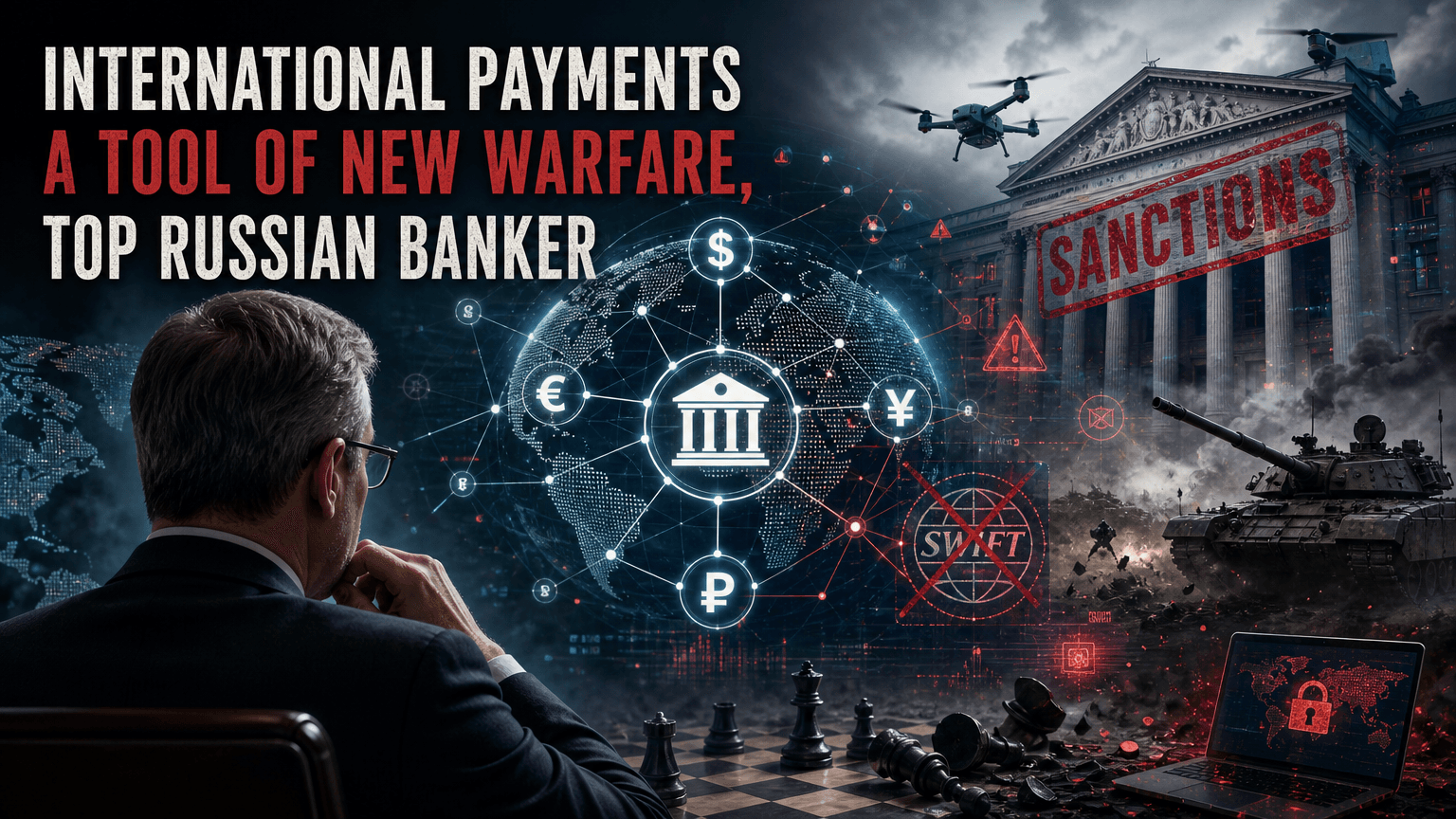
International payments a tool of new warfare top Russian banker
The Evolving Global Transaction Landscape
The global financial landscape is experiencing a significant transformation as multiple competing systems emerge, according to Pyotr Fradkov, chairman of Russia’s Promsvyazbank (PSB). In an ever-evolving economic environment, nations are not only investing in their own financial infrastructures but also innovating alternative systems to shield themselves from geopolitical and economic pressures. This shift represents a move away from reliance on Western-dominated financial frameworks and underscores the emerging complexities of cross-border payments in a globalized economy.
The New Battlefield: Cross-Border Payments
Fradkov has characterized cross-border payments as a tool of "new warfare" as countries seek ways to conduct international trade with increased autonomy and security. The conflict in Ukraine and subsequent geopolitical tensions have highlighted vulnerabilities within the financial systems traditionally governed by institutions from the United States and European Union. The sanctions and freezing of assets faced by Russia are a vivid illustration of the influence and potential risks associated with these established networks. In response, nations are actively seeking to diversify their financial interactions and reduce dependency on these traditional systems.
Russia's Strategic Financial Pivot
Motivated by external pressures and the need for strategic autonomy, Russia has accelerated its shift from established financial systems. In the aftermath of the Ukraine conflict and subsequent sanctions, Russia has begun to embrace alternative mechanisms to protect its financial sovereignty. Fradkov highlights the pressure on countries to devise national solutions to international payment challenges, noting Russia's strategic pivots such as the A7 cross-border payment system and increased trade transactions in rubles.
Emergence of National Payment Systems
Fradkov’s observations suggest that there is a global trend towards the development of national payment infrastructures, moving away from a unipolar financial system dominated by Western frameworks. The emergence of systems like China’s CIPS (Cross-Border Interbank Payment System) and Russia’s own initiatives are indications of this paradigm shift. In a world where the control of financial flows equates to strategic power, the establishment of national systems provides an avenue for countries to exercise greater control and efficiency over their economic transactions.
Incorporating Digital Assets and Stablecoins
As part of the evolving payment landscape, digital assets and stablecoins are increasingly seen as viable components of modern financial systems. However, Fradkov warns against a simplistic adoption of these instruments. While stablecoins, such as USDT tethered to the US dollar, offer potential benefits, their reliance on existing compliance and economic structures means they cannot be fully separated from geopolitical influences. Therefore, nations should approach these assets strategically, aiming to integrate them into a competitive financial framework.
Conclusion: A Competitive Modern Financial System
The transformation of the transaction system landscape into a competitive and diversified model is crucial for the development of resilient national economies. Fradkov emphasizes the need for these systems to not only respond to current restrictions but also to establish themselves as formidable contenders in the global market. By enhancing the capabilities of traditional banking systems and embracing digital innovations, countries can establish robust financial infrastructures that support sustainable economic growth and strategic independence.
13.08.2026